Home Help Wordart Banner: A Creative Catalyst for Modern Makers and Brands
In today’s saturated digital and physical marketplace, authenticity, personalization, and visual storytelling aren’t just nice-to-haves—they’re essential. Consumers increasingly favor products and communications that feel human-made, emotionally resonant, and thoughtfully crafted. Enter the Home Help Wordart Banner: not merely a decorative asset, but a versatile, hand-drawn wordcloud designed with intention—colorful, expressive, and deeply adaptable across mediums.
What Is the Home Help Wordart Banner?
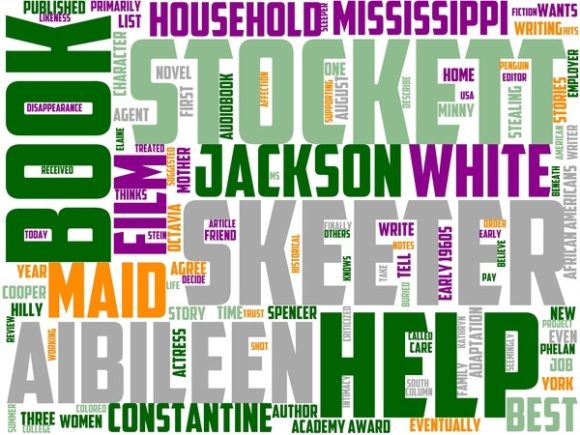
The Home Help Wordart Banner is a beautifully hand-drawn, colorful wordcloud centered around themes of care, support, domestic harmony, and everyday resilience. Unlike algorithmically generated word clouds, it’s intentionally composed—each word placed with visual rhythm, weight, and warmth. Its organic linework, balanced color palette, and layered typography evoke sincerity and approachability. It’s delivered as a high-resolution vector or print-ready raster file, optimized for scalability without loss of detail.
Crucially, it’s not a static image—it’s a creative foundation. Designed from the outset for real-world application, the Home Help Wordart Banner thrives on reinterpretation: resized for a business card, screen-printed onto organic cotton tea towels, laser-cut into wooden wall art, or embedded in a digital invitation suite. Its flexibility bridges craft and commerce, analog charm and digital precision.
Why It Resonates Now: Aligning With Macro Trends
This isn’t just another design asset—it arrives at a cultural inflection point where several powerful trends converge:
- The Rise of Intentional Domesticity: Post-pandemic, “home” has evolved from backdrop to identity. People invest in spaces and objects that reflect care—not just aesthetics, but values. Whether it’s a wellness coach launching a self-care journal or a boutique home goods brand curating slow-living kits, the Home Help Wordart Banner visually anchors that ethos. Its words—support, cozy, together, nurture, peace—aren’t filler; they’re semantic signposts aligned with lived experience.
- The Craft-Driven Commerce Shift: Platforms like Etsy, Instagram Shops, and even Amazon Handmade have normalized small-batch, maker-led production. Buyers now expect uniqueness *and* polish. The Home Help Wordart Banner meets both demands: its hand-drawn quality signals authenticity, while its technical readiness (CMYK/RGB variants, transparent backgrounds, layered PSD files) ensures professional output—no reworking needed.
- The Visual Language of Empathy in Branding: Consumers trust brands that communicate warmth without cliché. Generic stock imagery feels hollow; AI-generated text art often lacks soul. In contrast, this banner’s tactile imperfections—the slight variation in line thickness, the nuanced watercolor bleed between hues—signal human attention. That subtlety translates directly into perceived trustworthiness, especially for service-based professionals like therapists, organizers, or eldercare consultants.
Practical Integration Across Workflows
Its strength lies in how seamlessly it integrates into diverse creative and operational workflows—without requiring specialized tools or steep learning curves.
For Entrepreneurs & Small Business Owners
A home organization consultant might use the Home Help Wordart Banner as the centerpiece of a printable “Declutter Your Space, Calm Your Mind” workbook cover—then repurpose the same file (at reduced opacity) as a subtle watermark on client intake forms. A meal-prep service could embed it into reusable silicone cup sleeves or stitch it onto aprons—turning functional items into brand touchpoints that spark conversation and connection.
For Marketers & Content Creators
Digital campaigns gain texture when anchored by tangible assets. An email newsletter promoting a “Home Wellness Challenge” becomes more memorable with a banner variant used as a hero image—then reused as a sticker in welcome kits. Because the design is inherently shareable and non-proprietary in spirit (licensed for commercial use), it encourages user-generated content: customers photographing their custom mugs or notebooks featuring the banner, organically extending reach.
For Designers & Freelancers
This isn’t clipart—it’s a collaborative element. Designers layer it beneath hand-lettered headlines or pair it with minimalist photography to create contrast. Its open composition invites integration: a textile designer might isolate individual words to repeat as a subtle motif in fabric prints; a packaging designer could scale “fresh” and “simple” to dominate a soap label, letting the rest recede into background texture. Its versatility reduces time spent sourcing or illustrating custom typographic elements—freeing bandwidth for strategic refinement.
Technology Meets Tradition—Without Compromise
While rooted in hand-drawn tradition, the Home Help Wordart Banner is engineered for contemporary tech stacks. It’s compatible with Adobe Creative Cloud, Affinity Suite, Canva Pro, and Cricut Design Space. Vector versions allow infinite scaling for large-format wall decals; PNG variants with alpha channels drop cleanly into Shopify product mockups or social media templates. Even AI-assisted tools benefit: when prompting generative fill or background removal in Photoshop, its clear edges and consistent contrast yield reliable results—no manual cleanup.
This compatibility reflects a broader shift: the most impactful creative assets today are those built *with interoperability in mind*. They don’t ask users to adapt their systems—they adapt *to* them.
More Than Decoration: A Tool for Meaning-Making
At its core, the Home Help Wordart Banner serves a psychological function: it helps people articulate values that are often felt but hard to name. In therapeutic settings, it appears on worksheets for clients exploring boundaries or self-compassion. In educational contexts, teachers use printed versions as classroom visuals reinforcing emotional vocabulary. For caregivers navigating complex family dynamics, seeing “patience”, “listen”, and “breathe” rendered with gentle confidence offers quiet affirmation.
This emotional resonance extends to purchasing behavior. Research consistently shows that consumers pay premiums for products imbued with narrative meaning. A notebook featuring this banner isn’t just stationery—it’s a daily reminder of intention. A ceramic mug isn’t just drinkware—it’s a ritual object. That transformation—from utility to significance—is where the Home Help Wordart Banner delivers measurable value.
Designing for Longevity, Not Just Virality
Unlike trend-dependent assets, this banner avoids fleeting aesthetics—no neon gradients, no micro-typography fads, no forced minimalism. Its color palette draws from earthy ochres, soft sage greens, warm terracottas, and muted sky blues—tones proven to age gracefully across print and screen. Its hand-drawn quality resists obsolescence; it won’t look “dated” next year because it never claimed to be “of the moment.” Instead, it’s *time-aware*: respectful of tradition, responsive to current needs, and built to remain relevant as workflows evolve.
Conclusion: Where Craft, Clarity, and Care Converge
The Home Help Wordart Banner succeeds because it answers a quiet but urgent need: the desire for design that feels both expertly made and genuinely kind. It doesn’t shout. It invites. It doesn’t replace strategy—it amplifies it. Whether you’re launching a holistic wellness brand, designing limited-edition apparel, or crafting heartfelt client resources, it provides a rare combination: immediate usability, emotional intelligence, and enduring visual integrity.
In an era defined by speed and scale, choosing assets like the Home Help Wordart Banner is itself a statement—one that prioritizes resonance over reach, craftsmanship over convenience, and human-centered expression over algorithmic efficiency. That’s not just good design. It’s responsible creation.