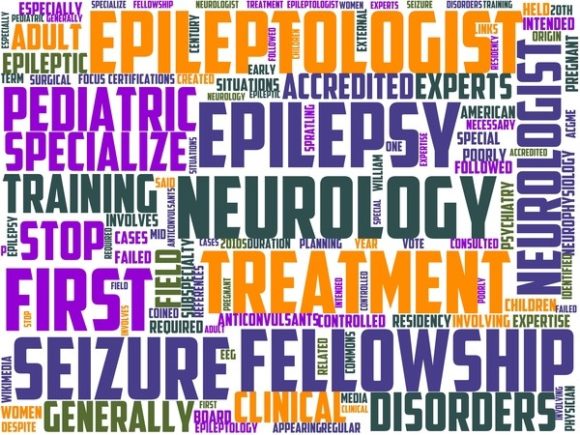
Epileptology Wordart Tumbler: Inspire, Educate, and Empower Through Thoughtful Design
For healthcare educators, neurology advocates, patient support groups, and creative professionals working at the intersection of science and compassion, finding tools that communicate complex ideas with clarity—and heart—is no small feat. The Epileptology Wordart Tumbler meets that need beautifully: a hand-drawn, colorful wordcloud rooted in the language of epilepsy care, research, and lived experience. It’s not just decorative—it’s purpose-built to spark dialogue, foster understanding, and uplift communities where medical accuracy and emotional resonance must go hand in hand.
Many professionals face real challenges when designing materials for epilepsy awareness: how to simplify clinical terminology without losing meaning; how to engage diverse audiences—from newly diagnosed teens to seasoned clinicians—without oversimplifying or alienating; and how to create visuals that feel both trustworthy and warm. Standard clipart or generic stock graphics often fall short, lacking authenticity or nuance. That’s where the Epileptology Wordart Tumbler stands apart. Each word—like “seizure,” “neurologist,” “resilience,” “EEG,” “advocacy,” “medication,” “stigma,” “support,” “awareness,” and “hope”—is intentionally selected, carefully arranged, and rendered in an organic, hand-crafted style that invites attention and reflection.
This isn’t just another digital download. It’s a flexible, scalable design asset meant to be woven into real-world communication. Whether you're launching a community education campaign, developing patient-facing handouts, or designing merch for an epilepsy walk fundraiser, the Epileptology Wordart Tumbler helps ground your message in both expertise and empathy. Its vibrant, non-clinical aesthetic makes neuroscience feel approachable—not intimidating—while its thoughtful vocabulary reinforces key concepts without jargon overload.
Consider these practical applications:
- Healthcare education: Print the wordcloud on posters for clinic waiting rooms or laminated handouts for caregiver workshops—using color and visual rhythm to reinforce learning and retention.
- Patient advocacy: Feature it on t-shirts, tote bags, or enamel pins sold at conferences or through nonprofit shops—transforming awareness into wearable solidarity.
- Creative therapy & peer support: Use it as a coloring page in support group sessions or as a base layer for mixed-media art projects, helping participants express emotions tied to diagnosis and treatment.
- Digital outreach: Integrate it into social media banners, webinar slides, or e-newsletter headers—adding visual consistency and thematic depth to online campaigns.
- Academic & professional development: Include it in syllabi, presentation decks, or conference programs to signal inclusivity, humanity, and interdisciplinary thinking in epileptology training.
What makes the Epileptology Wordart Tumbler especially valuable is its adaptability across formats and skill levels. A graphic designer can easily layer it into branding systems or textile patterns. A teacher or nurse educator can insert it into Canva templates for classroom posters or printable checklists. A volunteer coordinator can use it in DIY thank-you cards for event sponsors. Even someone with minimal design experience can print it at home and frame it as meaningful office décor—or trace and rework it by hand for a truly personal touch.
When selecting or using this resource, keep three considerations in mind:
- Context matters: Pair the wordcloud with clear, plain-language explanations—especially when sharing with patients or families new to epilepsy. The visual opens the door; your words guide them through it.
- Accessibility first: If printing or displaying digitally, ensure sufficient contrast between text and background. Consider offering a simplified version (e.g., high-contrast black-and-white) for users with visual impairments or light sensitivity—a common concern in epilepsy communities.
- Respect lived experience: While the wordcloud includes clinical terms, its strength lies in balancing them with human-centered language (“hope,” “community,” “dignity”). Always invite input from people with epilepsy when adapting it for public use—authentic representation starts with collaboration.
Different users will naturally approach the Epileptology Wordart Tumbler in ways that reflect their goals and constraints. A hospital marketing team might scale it for large-format banners in neurology departments. A small nonprofit may use it across low-cost printables—stickers, bookmarks, and postcards—to stretch limited budgets while maintaining visual cohesion. An artist or occupational therapist could deconstruct individual words for sensory-friendly tactile crafts or embroidery patterns. And a researcher preparing a grant application might embed it subtly in a project overview slide—not as decoration, but as a quiet affirmation of values-driven science.
The outcomes speak to its versatility: stronger engagement in educational settings, deeper emotional connection in advocacy efforts, more memorable branding for epilepsy-related initiatives, and renewed creative confidence among those who want to contribute meaningfully—but aren’t sure where to start. Because it’s hand-drawn—not algorithm-generated—the Epileptology Wordart Tumbler carries warmth and intentionality that digital fonts alone can’t replicate. It signals care before a single word is read.
Importantly, this tool supports not only external communication but internal alignment too. When teams—from neurologists to social workers to communications staff—use shared visual language like the Epileptology Wordart Tumbler, it reinforces collective commitment to person-centered care. It becomes a subtle reminder that epilepsy is not just a neurological condition, but a human experience shaped by relationships, resources, resilience, and respect.
If you’re ready to move beyond stock imagery and clinical bullet points, the Epileptology Wordart Tumbler offers a grounded, joyful, and deeply useful starting point. It doesn’t replace evidence-based practice—but it enhances it. It doesn’t simplify science—but it makes science feel seen. And in a field where stigma still lingers and understanding remains uneven, that kind of thoughtful design isn’t just nice to have. It’s necessary.
Get crafty—not just creatively, but intentionally—with the Epileptology Wordart Tumbler. Let every cup, poster, notebook, pillow, or banner carry more than color and shape. Let it carry meaning. Let it carry hope.